When I first started learning about personal finance, I did not realize how important a credit score could be. I used to think that a credit score was just another number that banks looked at when someone applied for a loan or credit card. Later, I understood that this number can affect many parts of financial life, including borrowing money, getting better interest rates, and sometimes even renting a home.
The good thing is that improving a credit score does not always require complicated strategies. In my opinion, the best approach is to build healthy financial habits and follow them consistently. You do not need to make dramatic changes overnight. Small improvements can make a meaningful difference over time.
In this article, I will explain how I would naturally improve a credit score by focusing on responsible financial habits rather than quick fixes.
Understand Your Credit Score First
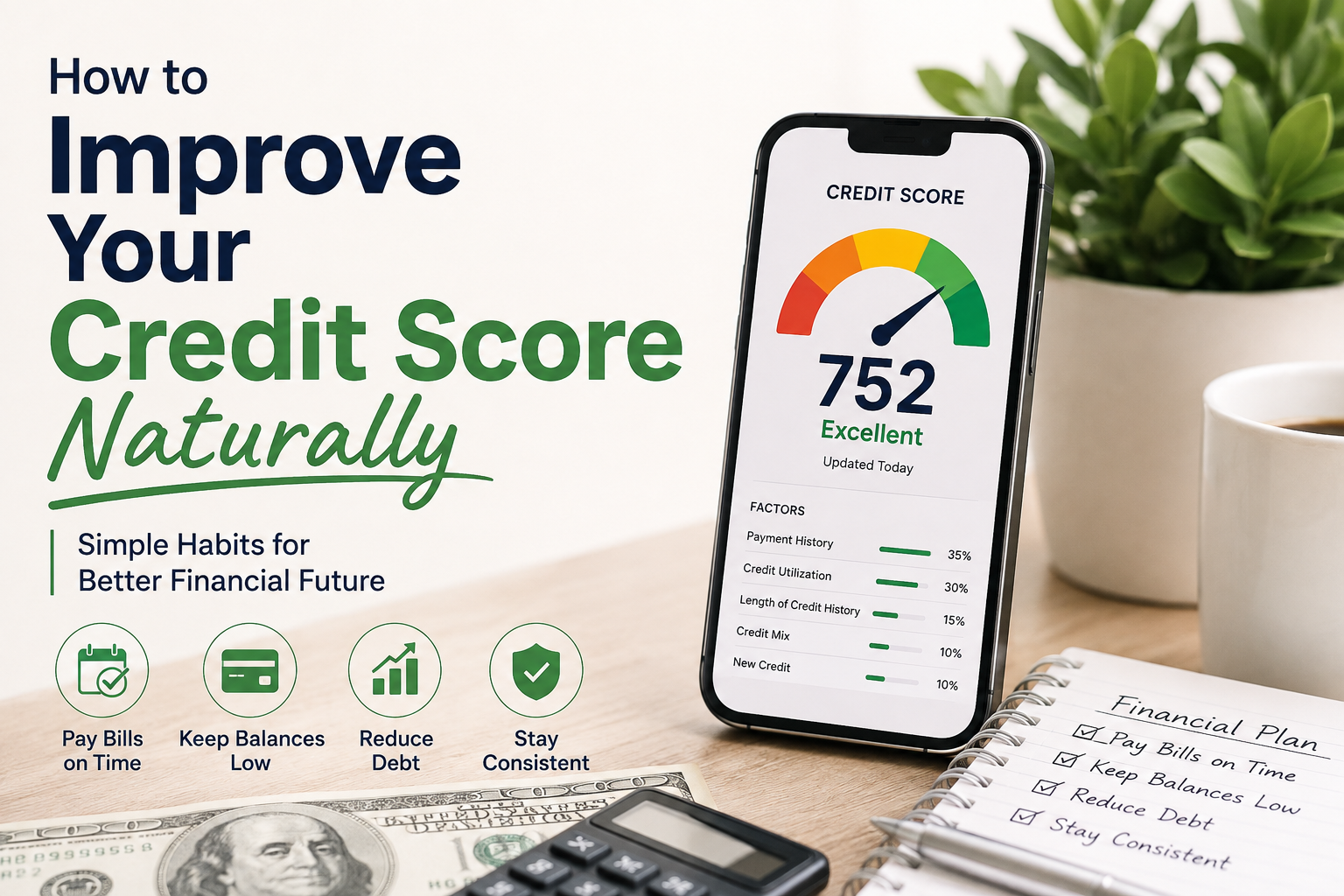
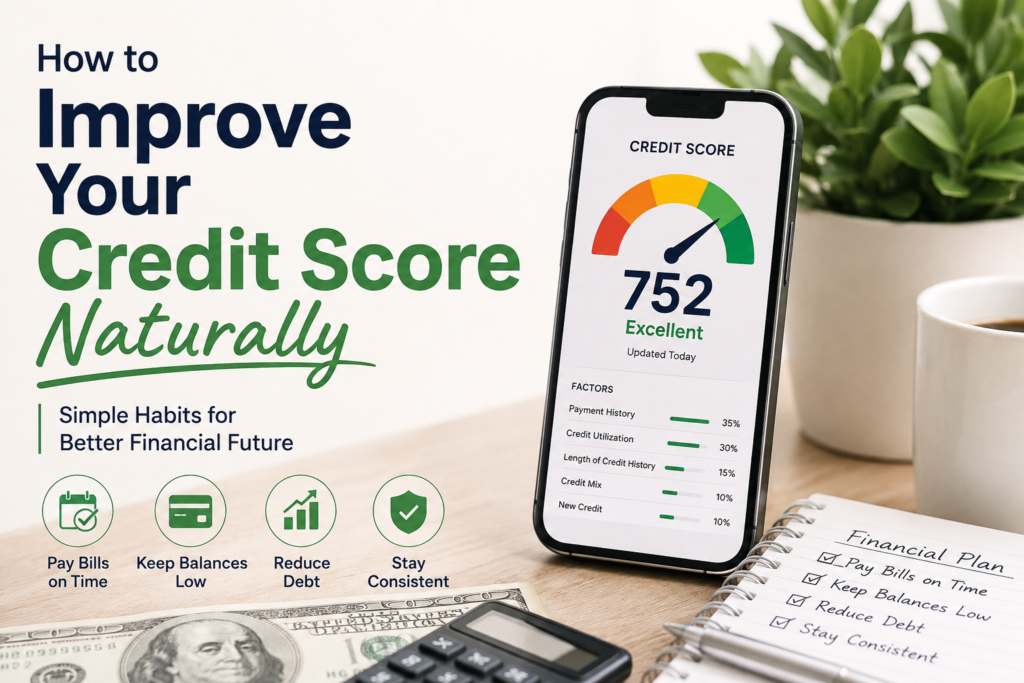
Before trying to improve my credit score, I would first want to understand what is affecting it. A credit score is generally based on information in a person’s credit history. Different scoring models can use different calculations, but several important factors commonly matter.
Payment history is one of the most important areas. It shows whether bills and debt payments are made on time. Credit utilization is another important factor, especially for people who use credit cards.
The age of credit accounts, the types of credit being used, and recent credit applications can also influence a score.
I believe understanding these factors makes the process much easier. Instead of randomly trying different methods, I can focus on the habits that are most likely to help.
Always Pay Bills on Time
If I wanted to improve my credit score naturally, making payments on time would be one of my first priorities.
A missed payment can become a serious problem, especially if it is reported to credit bureaus. Even one late payment can potentially affect a credit history.
To avoid this, I would create a simple payment routine. I might set reminders on my phone or use automatic payments when available. The goal is not to remember every payment at the last minute. The goal is to make paying bills a normal part of my monthly routine.
I would also avoid waiting until the due date whenever possible. Paying a few days earlier gives me some extra protection if there is a technical problem, bank delay, or unexpected situation.
Keep Credit Card Balances Low
Another habit I consider important is keeping credit card balances under control.
Credit utilization generally refers to how much of my available revolving credit I am using. For example, if I have a credit limit of $2,000 and a balance of $1,000, I am using half of my available limit.
Using a large portion of available credit can make me appear more dependent on borrowed money. Because of this, I would try to keep my balances comfortably below my limits rather than constantly spending close to the maximum.
For me, the simplest way to manage this would be to treat a credit card like a payment tool instead of extra income. I would only charge purchases that fit into my budget.
Pay More Than the Minimum When Possible
Making the minimum payment can keep an account in good standing, but it may take a long time to reduce the actual debt.
If I have extra money available, I would try to pay more than the minimum. This can reduce the balance faster and potentially reduce the amount of interest paid over time.
I would not put myself under unnecessary financial pressure just to make a huge payment. Instead, I would choose an amount that I can consistently afford.
Even an additional payment each month can help reduce debt gradually.
Do Not Apply for Credit Too Frequently
I also believe that being selective about new credit applications is important.
Every time I apply for certain types of credit, a hard inquiry may be placed on my credit report. One inquiry is not necessarily a major problem, but applying for many accounts within a short period can make my credit profile look different.
If I needed a new credit card or loan, I would first research the options and make sure the account actually fits my financial situation.
I would not apply for several cards simply because a company is offering a temporary reward.
Keep Older Accounts Open When Appropriate
The length of my credit history can also matter. Because of this, I would think carefully before closing an older credit account.
If an old account has no major fees and is manageable, keeping it open may help maintain a longer credit history. However, this does not mean everyone should keep every account forever.
If an account has expensive fees, creates temptation to overspend, or no longer makes financial sense, closing it might still be the right decision.
The important thing is to consider the overall financial situation rather than focusing only on the credit score.
Check Your Credit Reports
One of the simplest things I would do is check my credit reports regularly.
Credit reports contain information about accounts, payment history, balances, and other details used by lenders and scoring systems. Sometimes information can be incorrect or outdated.
If I noticed an account that I did not recognize or a payment reported incorrectly, I would investigate it and contact the appropriate credit reporting agency or creditor.
Checking my credit report also helps me understand my financial situation better. I do not have to wait until I apply for a loan to discover something unexpected.
Reduce Existing Debt
In my opinion, reducing debt is one of the healthiest long term financial habits.
When I have several outstanding balances, it can become difficult to manage monthly payments. Reducing those balances gives me more financial breathing room.
I would start by listing all my debts, including their balances, interest rates, and minimum payments. Then I would create a realistic repayment plan.
Some people prefer paying the smallest balance first because seeing a debt disappear can provide motivation. Others prefer paying the highest interest debt first because it can reduce interest costs.
Either approach can work if I remain consistent.
Create a Realistic Monthly Budget
A credit score cannot be separated completely from everyday money management.
If I do not know where my money is going, I can easily spend more than I earn and depend heavily on credit cards.
That is why I would create a simple monthly budget. I would list my income and necessary expenses first. Then I would include debt payments, savings, and personal spending.
I would not create an unrealistic budget that makes everyday life impossible. Instead, I would build something I can actually follow.
A realistic budget can make it easier to pay bills on time and avoid unnecessary debt.
Build an Emergency Fund
An emergency fund may not directly increase a credit score overnight, but I believe it can indirectly protect my credit.
Unexpected expenses can happen at any time. A car repair, medical bill, home problem, or temporary loss of income can put pressure on a person’s finances.
Without savings, I might be forced to use a credit card for an emergency. That could increase my balance and make repayment more difficult.
Even a small emergency fund can provide some protection. I would start with an amount that feels achievable and gradually build it over time.
Be Patient With the Process
One mistake I would avoid is expecting my credit score to improve instantly.
Credit improvement is usually a process. Positive financial habits need time to become part of my credit history.
I would focus less on checking my score every day and more on controlling the behaviors that influence it.
If I pay bills on time, manage my credit card balances, reduce debt, avoid unnecessary applications, and monitor my credit reports, I am building a stronger financial foundation.
The score can change over time, but the habits are what really matter.
Avoid Credit Repair Scams
When people want to improve their credit quickly, they can become targets for companies making unrealistic promises.
I would be very careful with anyone who promises to remove accurate negative information from my credit report or guarantees a specific credit score increase.
Accurate negative information generally cannot simply be erased because someone charges a fee.
Instead of looking for a magical solution, I would focus on things I can control. Responsible payments, lower debt, careful spending, and regular credit monitoring are much more useful in the long run.
My Simple Approach to Better Credit
If I were starting from a low credit score today, I would keep my strategy simple.
First, I would check my credit reports and understand exactly what is happening. Then I would make every payment on time. After that, I would work on reducing credit card balances and other debts.
I would avoid applying for credit unless I genuinely needed it. I would create a monthly budget and start building an emergency fund.
Most importantly, I would give the process time.
I think improving credit is less about finding a secret trick and more about becoming consistent with money. A good credit score is usually the result of many responsible decisions made over months and years.
Final Thoughts
Improving your credit score naturally does not have to feel complicated. In my view, the best strategy is to focus on financial habits that you can maintain for a long time.
Pay your bills on time, keep credit card balances manageable, reduce debt, avoid unnecessary credit applications, check your credit reports, and maintain a realistic budget.
I also believe that people should not become obsessed with the number itself. A credit score is useful, but financial stability is more important. If I can manage my money responsibly, avoid unnecessary debt, and consistently meet my financial obligations, my credit profile can gradually become stronger.
There is no need to rush the process or search for shortcuts. Good credit is something I would build through patience, discipline, and consistent financial decisions. The small choices I make today can create a much healthier financial future over time.