When I first started learning about investing, I thought it was something complicated that only wealthy people or financial experts could understand. There were so many terms, charts, companies, markets, and strategies that it felt overwhelming. Over time, I realized that investing does not have to be complicated when you start with the basics.
For me, the most important part of investing is not trying to become rich quickly. It is about learning how money can grow over time and making sensible decisions with the money I already have. If you are a beginner, I believe the best approach is to start slowly, understand what you are doing, and focus on building good financial habits.
In this article, I want to explain where I think beginners should start when they want to learn about investing.
Understand What Investing Really Means
Before putting money into anything, I think it is important to understand what investing actually means.
Investing simply means putting money into an asset with the expectation that it may increase in value or generate income over time. Stocks, bonds, mutual funds, exchange traded funds, real estate, and some other assets can all be considered investments.
The important word here is time.
Investing is generally not about making money overnight. Markets can move up and down in the short term, but investors often focus on what can happen over several years.
I personally think beginners should avoid looking at investing as a shortcut to wealth. It is better to think of it as a long term financial habit.
Start With Your Financial Foundation
One mistake I see beginners make is rushing to invest before getting their basic finances under control.
Before investing, I would first look at my income, expenses, savings, and debt. If I have expensive debt, especially debt with high interest, paying that down may be more important than investing aggressively.
I would also try to build an emergency fund. An emergency fund gives me money that I can use if something unexpected happens, such as a major repair, job loss, or urgent expense.
The reason this matters is simple. If I invest all my available money and then face an emergency, I may be forced to sell my investments at the wrong time.
Having a financial cushion can make investing much less stressful.
Decide Why You Want to Invest
Before choosing an investment, I think every beginner should ask one simple question.
Why am I investing?
Your answer could be saving for retirement, buying a home, building long term wealth, paying for education, or simply creating another source of financial growth.
The goal matters because different goals can require different approaches.
For example, money that I may need next year should generally not be treated the same way as money I plan to invest for twenty years.
When I know my goal, I can think more clearly about how much risk I am willing to accept and how long I can leave my money invested.
Learn the Difference Between Saving and Investing
Saving and investing are related, but they are not exactly the same.
When I save money, I usually want it to remain relatively safe and available when I need it. A savings account is a common example.
When I invest, I accept some level of risk because I am hoping for growth or income over time.
Investments can lose value. That is something every beginner should understand before starting.
I think this is one of the most important lessons in investing. There is no investment that guarantees high returns without risk. Whenever someone promises huge profits with little or no risk, I become very cautious.
Learn About Stocks
Stocks are one of the first investments many beginners hear about.
When I buy a stock, I am purchasing a small ownership interest in a company. If the company performs well, the value of the stock may increase. Some companies also pay dividends to shareholders.
However, individual stocks can be risky. A company can perform badly, face competition, lose customers, or experience other problems.
For that reason, I would not recommend that a complete beginner put all their money into one company.
Learning how stocks work is useful, but diversification is also extremely important.
Consider Diversification
Diversification means spreading investments across different assets rather than putting everything in one place.
I think of it as avoiding the situation where one bad investment can seriously damage my entire portfolio.
For example, instead of investing everything in one company, an investor might spread money across many companies or different types of assets.
One common way beginners get diversification is through funds that hold many different investments.
Diversification does not eliminate risk, but it can reduce the impact of problems affecting one particular investment.
Understand Index Funds and ETFs
Index funds and exchange traded funds, commonly called ETFs, are worth learning about if you are new to investing.
An index fund generally aims to follow a particular market index instead of trying to select individual investments and constantly beat the market.
ETFs can hold a collection of stocks, bonds, or other assets and can provide diversification through a single investment.
What I like about the basic idea behind broad market funds is simplicity. Instead of spending all my time trying to determine which individual company will become the next big success, I can invest across a wider group of companies.
Of course, every investment has risks, fees, and other considerations, so I would still research the specific fund before investing.
Learn About Risk
Risk is something beginners should never ignore.
Every investment has some form of risk. The value of stocks can fall. Bonds can have credit and interest rate risks. Real estate can lose value or become difficult to sell. Even cash can lose purchasing power over time because of inflation.
I think the right question is not whether an investment has risk. The better question is whether I understand the risk and whether I can handle it.
If seeing my investment fall by twenty percent would cause me to panic and sell immediately, I need to think carefully about whether my investment strategy matches my comfort level.
Start Small
I do not believe beginners need a huge amount of money to start learning about investing.
Starting small can actually be useful because it allows me to gain experience without putting too much money at risk.
For example, I could begin with an amount that fits comfortably within my budget and gradually increase my contributions as I become more knowledgeable and financially stable.
The goal at the beginning is not to impress anyone with the size of the portfolio. The goal is to develop good habits.
Consistency can be more important than making one large investment and then never investing again.
Think Long Term
One of the biggest lessons I have learned about investing is the importance of patience.
Markets do not move upward every day, every month, or even every year. There can be periods of significant declines.
This is why I think beginners should understand their investment time frame before putting money into the market.
If I am investing for a long term goal, temporary market declines may be less important than they appear when I look at them emotionally.
Trying to predict exactly when the market will rise or fall can also be extremely difficult.
Instead of constantly trying to find the perfect moment, many long term investors focus on regular contributions and staying disciplined.
Avoid Following Investment Hype
Social media has made investing information easier to find, but it has also made investment hype much easier to spread.
I have seen how quickly people can become excited about a particular stock, cryptocurrency, or investment trend because everyone online seems to be talking about it.
The problem is that popularity does not automatically make an investment good.
Before investing in anything, I would want to understand what I am buying, why I am buying it, what risks are involved, and what could cause the investment to lose value.
I would also be careful with anyone promising guaranteed returns or encouraging me to invest immediately because an opportunity is supposedly disappearing.
Keep Learning
I believe investing is a subject that you never completely finish learning.
Even after understanding the basics, there are many areas to explore, including asset allocation, taxes, fees, inflation, retirement planning, company financial statements, and portfolio management.
The more I learn, the more confident I can become when making financial decisions.
At the same time, I do not think beginners need to understand everything before they begin. Learning the fundamentals and gradually expanding your knowledge can be a much more practical approach.
My Simple Approach for Beginners
If I were starting from zero today, I would keep my first steps simple.
First, I would understand my monthly income and expenses. Then I would work on building emergency savings and dealing with expensive debt.
After that, I would define my investment goals and time frame. I would learn about stocks, bonds, funds, ETFs, diversification, fees, and risk.
Then I would choose a regulated investment platform available in my country and start with an amount I could comfortably afford.
Most importantly, I would avoid making decisions based entirely on social media trends or short term market movements.
I would focus on learning and building consistency rather than trying to become wealthy overnight.
Final Thoughts
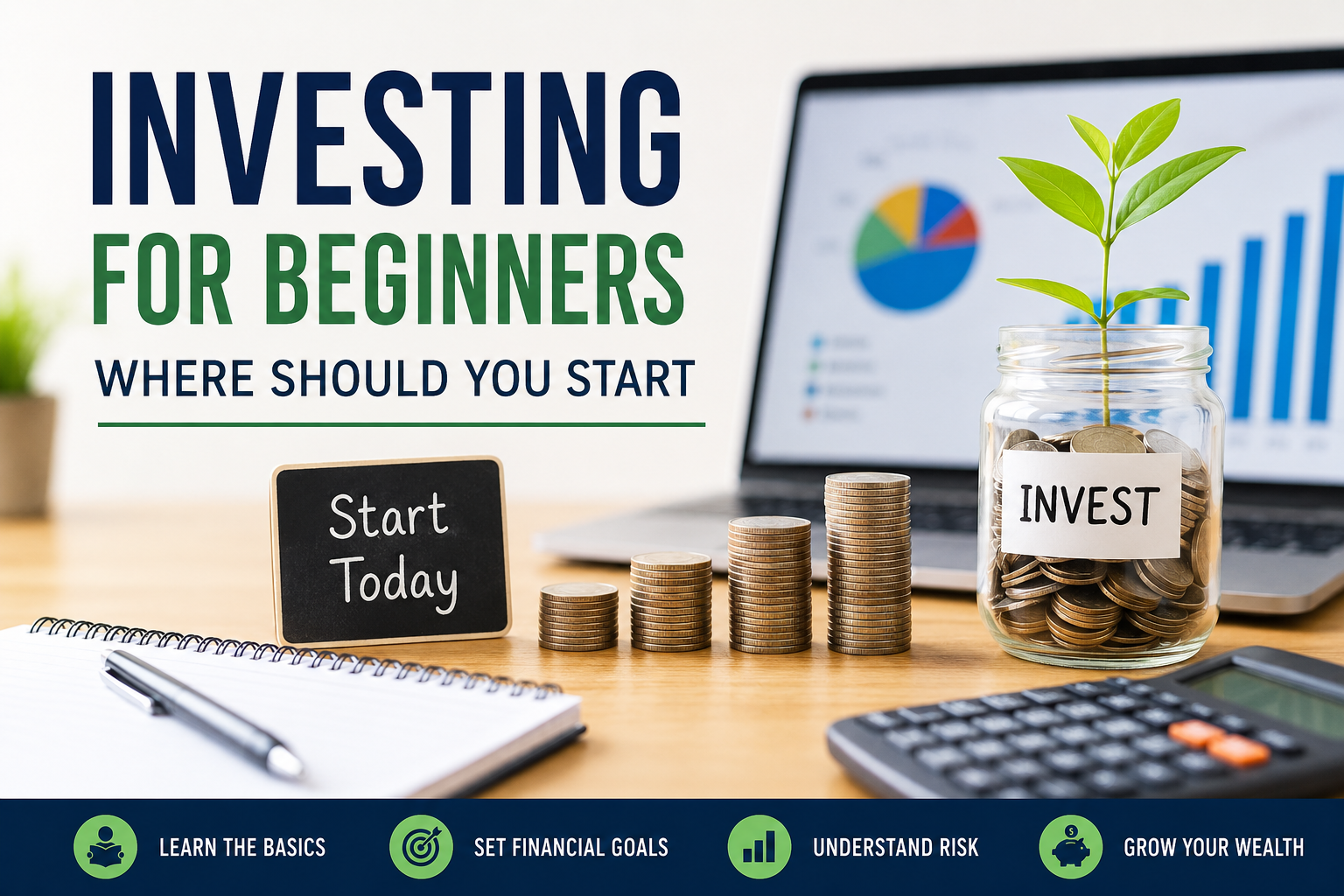
Investing for beginners can seem intimidating at first, but I believe it becomes much easier once you understand the basic principles.
You do not need to predict the market perfectly. You do not need to become a financial expert overnight. You also do not need a huge amount of money to begin learning.
What matters most is having a clear goal, understanding the risks, keeping your finances organized, diversifying where appropriate, and giving your investments enough time to potentially grow.
For me, investing is less about chasing quick profits and more about developing a long term relationship with money. The earlier you start learning, the more opportunities you have to build better financial habits.
The most important thing I would tell any beginner is this: do not invest in something simply because someone else says it will make you rich. Take your time, do your own research, understand what you are buying, and only invest money that fits your financial situation.
Investing is a journey, not a race. Starting with knowledge and patience can be far more valuable than starting with a large amount of money.