Debt can easily become one of the most stressful parts of personal finance. When different bills, credit cards, loans, and monthly payments start coming together, it can feel like there is no clear way out. I believe the biggest mistake people make is trying to pay everything randomly without having a proper plan.
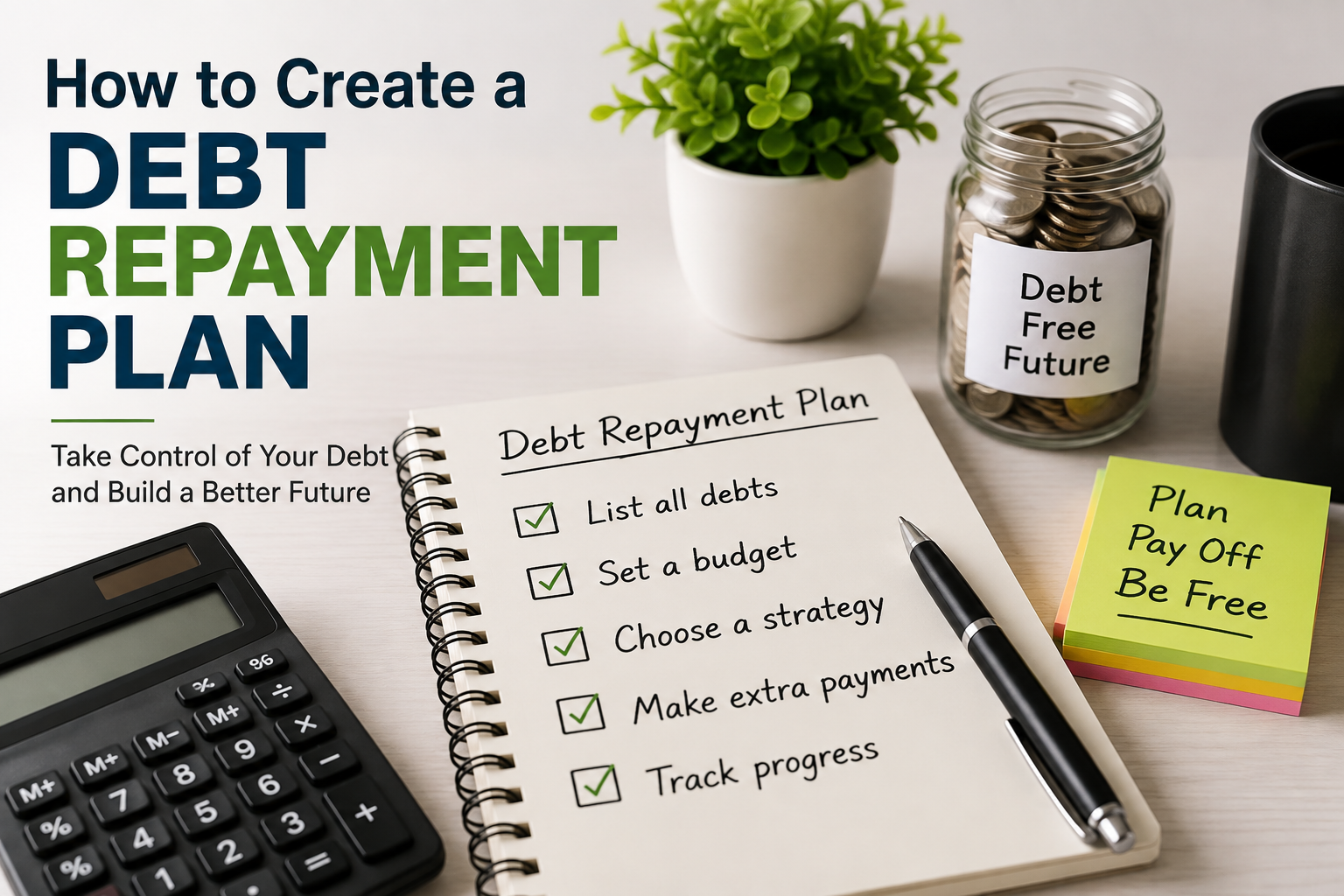
A debt repayment plan gives you direction. It helps you understand exactly what you owe, where your money is going, and what you need to do each month to become debt free. You do not need to have a perfect income or a huge amount of savings to start. You simply need a realistic plan and the discipline to follow it.
In this article, I will explain how I would create a debt repayment plan step by step. The goal is not only to reduce debt but also to build better financial habits for the future.
Understand Your Total Debt
The first thing I would do is stop avoiding the numbers. Sometimes people feel uncomfortable looking at their debt because they are afraid of how large the total amount might be. However, you cannot create a useful repayment plan without knowing exactly what you owe.
Make a list of every debt you have. Include credit cards, personal loans, student loans, car loans, medical bills, and any other money you need to repay.
For each debt, write down the current balance, interest rate, minimum monthly payment, and payment due date.
For example, you might have one credit card with a balance of $2,000, another with $1,000, and a personal loan with a balance of $5,000. Looking at these numbers together gives you a much clearer picture.
I personally think this first step is important because it turns a vague financial problem into something you can actually manage.
Calculate Your Monthly Income
After understanding your debt, the next step is to look at your income.
Write down all the money you normally receive each month. This could include your salary, freelance income, business income, rental income, or other reliable sources.
Try to use your regular income rather than counting money that you may or may not receive. If your income changes every month, use a conservative average based on previous months.
Knowing your monthly income helps you understand how much money is available for essential expenses and debt payments.
The goal is not to put every dollar toward debt. You still need enough money for food, housing, transportation, utilities, and other basic needs.
Track Your Monthly Expenses
This is one of the steps I would never skip.
Many people know how much they earn but do not really know where their money goes. Small purchases can add up quickly, especially when they happen every day.
For at least one month, track your spending. Divide your expenses into categories such as housing, food, transportation, utilities, entertainment, shopping, subscriptions, and debt payments.
Once you see your spending clearly, look for areas where you can reduce unnecessary expenses.
Maybe you are paying for subscriptions you rarely use. Perhaps you eat outside more often than you realize. You might also find that small online purchases are taking a significant portion of your income.
The goal is not to remove every enjoyable thing from your life. Instead, I believe it is better to identify expenses that are less important to you and redirect some of that money toward your debt.
Create a Realistic Debt Budget
Now you can create a monthly budget.
Start with your income and subtract your essential living expenses. Then include the minimum payments required for all your debts.
The money left after these expenses is what you can potentially use for extra debt payments.
For example, suppose your monthly income is $3,000. If your essential expenses and minimum debt payments total $2,500, you have $500 available.
You could use that extra $500 to pay down one specific debt faster.
However, I would avoid creating an unrealistic budget. If you know you need some money for entertainment, family activities, or unexpected expenses, include it in your plan.
A plan that is extremely strict for two weeks and then gets abandoned is not better than a balanced plan that you can follow for several months.
Choose a Debt Repayment Method
Once your budget is ready, decide how you want to attack your debt.
Two common methods are the debt snowball method and the debt avalanche method.
With the debt snowball method, you focus on paying off your smallest debt first while continuing to make minimum payments on everything else. Once the smallest debt is gone, you move that payment toward the next smallest debt.
The debt avalanche method focuses on interest rates. You make minimum payments on all debts and put extra money toward the debt with the highest interest rate.
The avalanche method can save money on interest, while the snowball method can provide quick psychological wins.
Personally, I think the best method is the one you can actually stay committed to. If paying off a small balance quickly motivates you, the snowball approach can be very useful. If you are focused on reducing interest costs, the avalanche method may make more sense.
Set a Monthly Extra Payment
Your debt repayment plan should include a specific extra payment.
Do not simply say that you will pay more whenever possible. Give yourself a clear number.
For example, you might decide to make an additional $300 payment every month toward your target debt.
Having a specific amount makes your goal easier to measure.
If you receive extra income from freelance work, overtime, a bonus, or selling unused items, you can also decide to put part of that money toward debt.
At the same time, I would not recommend putting every unexpected dollar into debt if you have no emergency savings at all. A small financial cushion can help prevent you from using a credit card again when something unexpected happens.
Build a Small Emergency Fund
An emergency fund may seem unrelated to debt repayment, but I believe it is an important part of the process.
Imagine you are making great progress on your credit card balance and suddenly your car needs an expensive repair. If you have no savings, you might have to borrow money again.
Even a small emergency fund can provide some protection.
You do not necessarily need a huge amount at the beginning. Start with an amount that fits your financial situation and gradually increase it as your debt becomes more manageable.
The exact amount depends on your income, expenses, and personal circumstances.
Reduce New Debt
Paying old debt while creating new debt at the same time can make your progress extremely slow.
This is why I would try to avoid unnecessary borrowing while following a repayment plan.
If possible, stop using credit cards for purchases you cannot pay off. Use cash or a debit account for everyday spending when that helps you stay within your budget.
This does not mean credit cards are always bad. The problem is using borrowed money without a clear repayment strategy.
Your goal should be to create a gap between your income and spending so that you can consistently reduce your balances.
Automate Your Payments
One simple habit that can make debt repayment easier is automation.
Set up automatic payments for at least the required minimum amounts whenever possible. This can help you avoid missed payments and late fees.
You can then make your additional payment toward your target debt according to your repayment plan.
Automation also removes some of the stress of remembering multiple due dates.
I would still check your accounts regularly because automatic payments do not mean you should stop monitoring your finances.
Review Your Progress Every Month
A debt repayment plan should not be something you create once and forget.
Set aside some time at the end of every month to review your progress.
Check how much you paid, how much interest was charged, how much your balances decreased, and whether your budget worked.
If your income changes, update your plan. If your expenses increase, adjust your debt payment temporarily if necessary.
The important thing is to keep moving forward.
I also recommend celebrating small victories. Paying off your first credit card or reaching a specific balance can give you motivation to continue.
Look for Ways to Increase Income
Cutting expenses is useful, but there is a limit to how much you can reduce.
Increasing your income can give your debt repayment plan more power.
Depending on your situation, you might consider freelance work, part time work, selling unused items, tutoring, online services, or other legitimate ways to earn additional income.
You do not necessarily need to make a huge amount of extra money.
Even an additional $100 or $200 each month can make a difference when consistently applied to debt.
The important thing is to avoid spending the extra income as soon as you receive it. Give the money a specific purpose before it arrives.
Keep Your Motivation Strong
Debt repayment can take time, especially when you have several large balances.
There may be months when your progress feels slow. That is normal.
I think it helps to focus on the progress you are making rather than constantly thinking about how far you still have to go.
Keep a simple record of your debt balances. Watching the total number decrease can be motivating.
You can also create small milestones. For example, your first goal could be paying off one small balance. Your next goal could be reducing your total debt by a certain percentage.
Every payment is progress.
Final Thoughts
Creating a debt repayment plan is not about finding a magical way to become debt free overnight. It is about taking control of your money and making consistent decisions.
Start by listing your debts, understanding your income, tracking your expenses, and creating a realistic budget. Then choose a repayment method and decide exactly how much extra money you can put toward your target debt each month.
I believe consistency matters more than perfection. You may have an unexpected expense or a difficult month, and that does not mean your entire plan has failed. Adjust the numbers, continue making your payments, and get back on track.
The most important thing is to stop letting debt control your financial decisions. Once you have a clear plan, every payment has a purpose. Over time, those payments can turn into lower balances, less financial stress, and eventually the freedom that comes from being debt free.
For me, the biggest lesson is simple. You do not need to solve your entire debt problem today. You only need to make a realistic plan and take the next step.