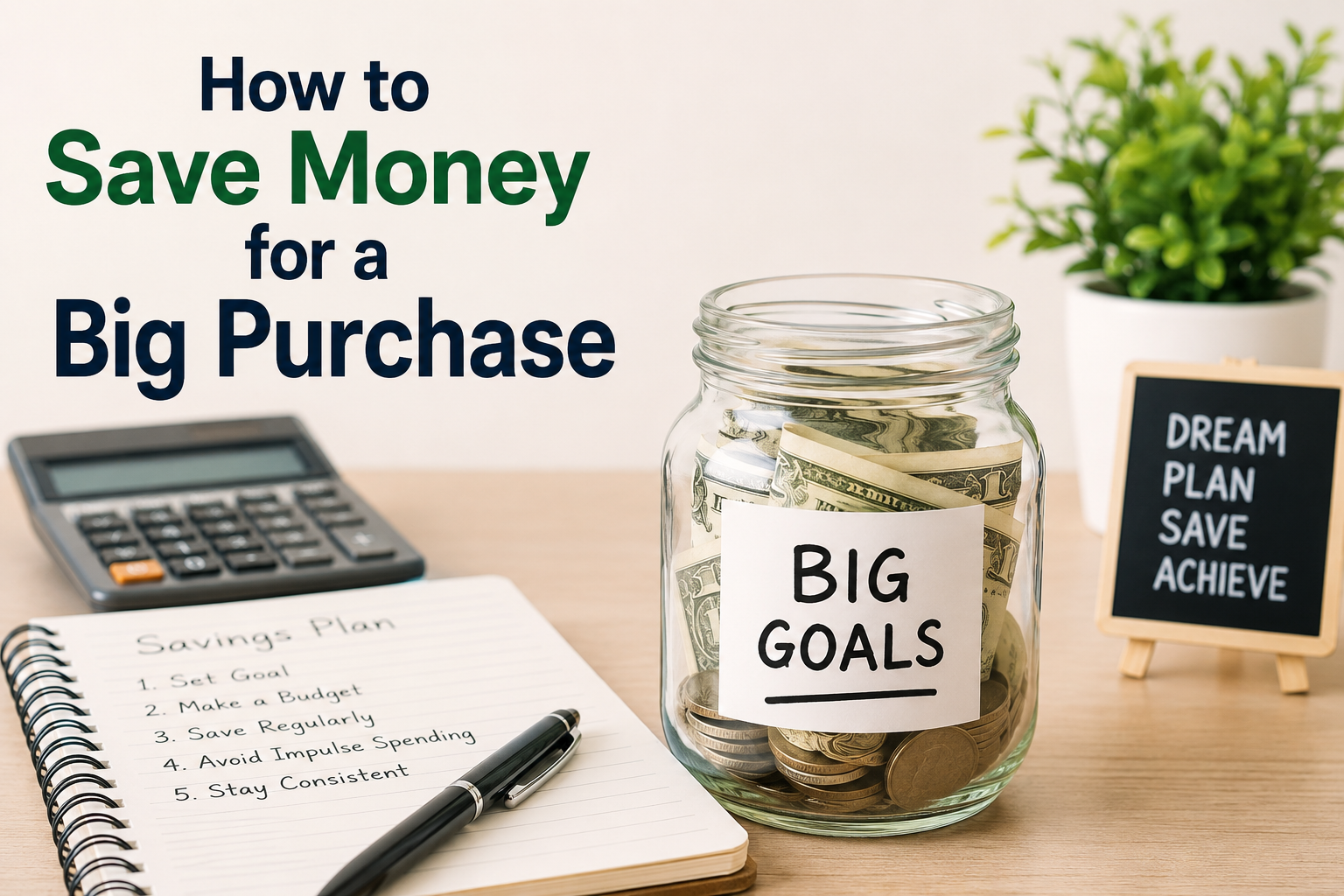
Saving money for a big purchase can feel difficult, especially when there are already many regular expenses to manage. Whether I want to buy a new laptop, a car, furniture, a phone, or plan a special trip, I know that spending a large amount of money without proper planning can create stress later. That is why I believe saving for a big purchase is much better than buying something immediately and worrying about the payments afterward.
In my experience, saving becomes much easier when I have a clear goal and a simple plan. I do not try to save a huge amount overnight. Instead, I break the goal into smaller steps that I can manage every month. This makes the process feel realistic and keeps me motivated.
Decide What You Want to Buy
The first thing I do when saving for a big purchase is decide exactly what I want. A general goal such as I want to save money is not very motivating. A specific goal gives me something clear to work toward.
For example, if I want to buy a laptop that costs $1,000, I know exactly how much money I need. If I want to buy a car, I can decide how much I need for the initial payment and other expenses.
I also think about whether the purchase is actually important. Sometimes we want something because we see other people using it or because it looks attractive in advertisements. Before I start saving, I ask myself whether I will still want the item after a few weeks.
This simple question can prevent unnecessary spending and help me focus on purchases that genuinely matter to me.
Set a Realistic Savings Goal
After deciding what I want, I calculate how much I need to save. I do not simply say that I will save whenever I have extra money. That approach usually does not work because there is always something else that needs money.
Instead, I set a specific target.
For example, if I need $1,200 and want to make the purchase in twelve months, I need to save about $100 each month. Looking at the goal this way makes it feel much easier.
If $100 every month is difficult, I can extend the timeline. Maybe I can save $75 per month and reach the goal in a little longer. The important thing is to create a plan that fits my actual income.
I believe a realistic plan is better than an ambitious plan that I cannot follow.
Create a Separate Savings Account
One of the most useful things I can do is keep my big purchase savings separate from my regular spending money. When all my money is in one account, it becomes easy to spend part of the savings without realizing it.
A separate savings account gives the money a purpose. When I see that account growing, I feel more motivated to leave it alone.
I can also give the account a name related to my goal. Instead of simply calling it savings, I might name it New Laptop Fund or Car Fund. This reminds me why I am saving whenever I look at the balance.
Even if the amount I save is small, seeing progress can make a big difference.
Make Saving Automatic
I find automatic saving very useful because it removes the need to remember every month. If possible, I arrange for a fixed amount to move into my savings account shortly after I receive my income.
For example, if I decide to save $100 each month, I can arrange an automatic transfer of that amount. Once the money is moved, I treat the remaining amount as my available spending money.
This method works because saving becomes part of my routine instead of something I have to think about every day.
I also believe that saving money first is usually better than spending first and saving whatever is left. If I wait until the end of the month, there may be nothing left to save.
Review My Monthly Expenses
When I want to save for something expensive, I look closely at where my money is going. I check my regular expenses and try to find areas where I can make small changes.
I do not believe that saving means removing every enjoyable thing from life. Instead, I look for spending that does not provide much value.
For example, I might reduce unnecessary food deliveries, unused subscriptions, frequent online shopping, or impulse purchases. These expenses may look small individually, but they can add up over several months.
If I can save even $10 or $20 from several different areas, the total can become meaningful.
Use the Extra Money Wisely
Another strategy I use is putting unexpected money toward my savings goal. This can include bonuses, gifts, refunds, freelance income, or money from selling things I no longer use.
I do not necessarily save every extra dollar. Sometimes I use part of it for myself and put the rest into my savings.
For example, if I receive an unexpected $200, I might save $150 and use $50 for something I enjoy. This allows me to make progress without feeling like I am constantly restricting myself.
Extra income can sometimes help me reach a big purchase goal much faster than regular monthly savings alone.
Cut Back on Impulse Purchases
Impulse spending can make saving for a big purchase much harder. I have found that many things I want immediately do not seem nearly as important after waiting for a few days.
One simple habit is to give myself a waiting period before buying something that was not planned. If I see something I like, I can wait a few days before deciding.
This gives me time to think about whether I actually need it.
I also avoid shopping online when I am bored because browsing can quickly turn into spending. Removing saved payment details from shopping websites can also make unnecessary purchases less convenient.
Small changes in my shopping habits can help protect the money I am trying to save.
Find Ways to Increase Income
Cutting expenses is helpful, but increasing income can make the saving process even faster. If I have the opportunity, I look for simple ways to earn additional money.
Depending on my skills and available time, this might include freelance work, selling unused items, tutoring, part time work, or offering a service to people I know.
I do not think I need to completely change my lifestyle to make extra money. Even a small additional income can be useful when it is specifically directed toward a savings goal.
For example, earning an extra $100 per month and putting all of it toward a big purchase can add $1,200 to my savings in one year.
Track My Progress
Tracking my savings keeps me motivated. I like knowing exactly how much I have saved and how much is still needed.
I can use a simple notebook, spreadsheet, budgeting app, or even a note on my phone. The method does not matter as much as actually keeping track.
For example, if my goal is $1,500 and I have already saved $900, I know that I am more than halfway there. Seeing this progress reminds me that my efforts are working.
I also celebrate small milestones. Reaching $500, $1,000, or another important number can give me motivation to continue.
Avoid Using Credit for the Whole Purchase
Credit can make a large purchase look more affordable because I do not have to pay everything immediately. However, I think it is important to understand the total cost before using credit.
Interest and additional fees can make an item much more expensive than its original price.
Whenever possible, I prefer saving enough money to make the purchase without creating unnecessary debt. If I do use financing, I carefully check the interest rate, payment schedule, and total amount I will eventually pay.
A big purchase should improve my life, not create months or years of financial pressure.
Look for a Better Price
Saving money does not always mean earning more or spending less every day. Sometimes I can reach my goal faster by reducing the price of the thing I want to buy.
Before making a big purchase, I compare different stores and brands. I look for discounts, seasonal sales, promotional offers, and reliable used options when appropriate.
I also ask myself whether I really need the newest version of something. A previous model may provide almost everything I need while costing significantly less.
Being patient can sometimes save a large amount of money.
Stay Patient
The hardest part of saving for a big purchase is often patience. When I really want something, waiting can feel frustrating. However, I remind myself that the goal is not simply to own the item. The goal is to buy it without damaging my financial situation.
There may be months when I cannot save as much as planned. That does not mean I have failed. I can adjust my plan and continue.
What matters most is consistency.
Even saving a small amount regularly can eventually create a significant amount of money. The process may be slow at first, but progress becomes easier to notice over time.
Final Thoughts
Saving for a big purchase does not have to be complicated. From my point of view, the most important things are having a clear goal, knowing the exact amount I need, creating a realistic timeline, and saving consistently.
I also believe that small financial decisions matter more than people sometimes realize. Cutting a few unnecessary expenses, saving automatically, using extra income, and avoiding impulse purchases can make a big difference over several months.
Most importantly, I try to enjoy the process instead of only thinking about the final purchase. Every amount I save is proof that I am becoming more disciplined with my money.
A big purchase feels much better when I know I worked for it, planned for it, and paid for it without putting unnecessary pressure on my future finances. For me, that feeling of financial control is just as valuable as the purchase itself.