
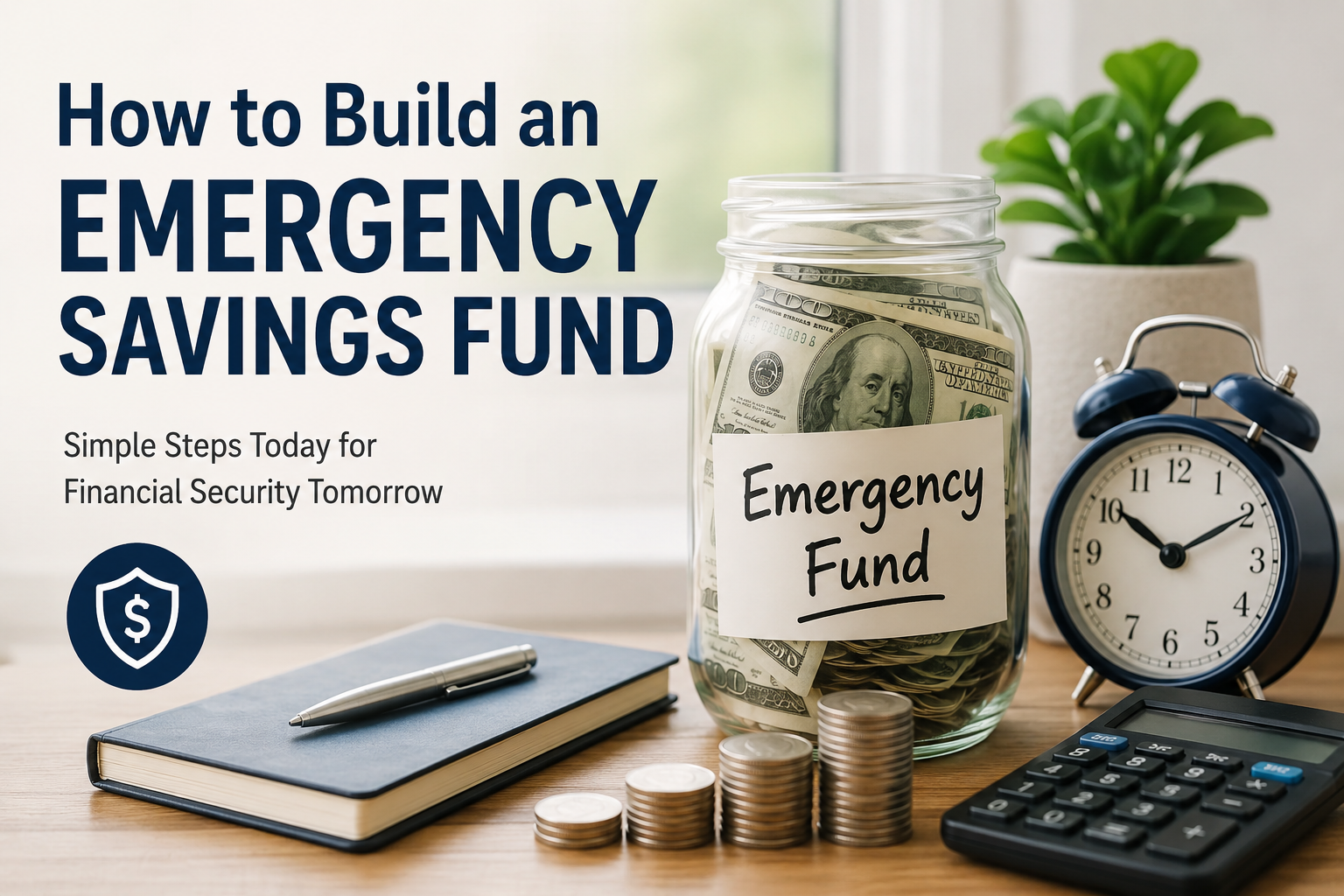
Life can be unpredictable. One month everything may be going perfectly, and the next month an unexpected expense can appear out of nowhere. It could be a medical bill, car repair, home repair, job loss, or any other situation that requires money immediately. This is one of the main reasons I believe everyone should have an emergency savings fund.
An emergency fund is simply money that you keep aside for unexpected expenses. It is not money for shopping, vacations, entertainment, or things you want to buy. It is money that gives you financial protection when something goes wrong.
In my opinion, building an emergency fund is one of the most important steps toward financial stability. You do not need to save a huge amount of money in the beginning. What matters most is starting and continuing the habit.
What Is an Emergency Savings Fund?
An emergency savings fund is a separate amount of money reserved only for unexpected financial situations. The purpose is to help you handle emergencies without depending on credit cards, loans, or borrowing money from family and friends.
For example, imagine your car suddenly needs an expensive repair. If you already have money saved for emergencies, you can pay the bill without disturbing your regular monthly budget.
The same thing applies if you suddenly lose your job. Having savings can give you some time to find another source of income without immediately worrying about every bill.
I personally think an emergency fund is not only about money. It is also about peace of mind. Knowing that you have some money available can make difficult situations much easier to manage.
Why Is an Emergency Fund Important?
Many people focus on earning more money, but they do not think enough about protecting the money they already have. An emergency fund helps with exactly that.
Without savings, even a small unexpected expense can create financial stress. You might use a credit card, take a personal loan, or borrow from someone else. If this happens repeatedly, debt can become difficult to control.
An emergency fund gives you another option.
Instead of saying, “I have no idea how I will pay for this,” you can say, “I have some money saved for situations like this.”
That difference can be extremely valuable.
Another benefit is that an emergency fund can protect your long term financial goals. If you are saving for a house, investing for retirement, or paying off debt, an unexpected expense can force you to stop those plans. Emergency savings can help you stay on track.
How Much Should You Save?
One of the most common questions is how much money should be in an emergency fund.
There is no single number that works for everyone. Your target should depend on your income, monthly expenses, job stability, family responsibilities, and lifestyle.
A simple starting goal could be saving enough money to cover one month of essential expenses. Once you reach that goal, you can work toward three months of expenses.
Some people prefer to keep six months or even more of essential expenses because their income may be less predictable.
For example, if your essential monthly expenses are $1,500, then three months of expenses would be $4,500.
The important thing is not to become discouraged by the final number. If $4,500 sounds impossible, do not use that as an excuse to do nothing. Start with $100, $500, or whatever amount you can reasonably manage.
A small emergency fund is still better than having nothing saved.
Start With Your Current Budget
Before building an emergency fund, I recommend looking at your current spending.
You need to understand where your money is going every month. Write down your income and your essential expenses. These may include rent, food, utilities, transportation, insurance, debt payments, and other necessary costs.
Then look at your non essential spending.
You may discover that some expenses are taking more money than you realized. Maybe you are spending too much on food delivery, subscriptions, entertainment, or unnecessary shopping.
This does not mean you have to remove every enjoyable thing from your life. I believe budgeting should be realistic. If your budget is too strict, you may follow it for a few weeks and then give up.
Instead, find a balance that allows you to save while still enjoying your life.
Set a Small Monthly Savings Goal
Once you understand your budget, decide how much you can save every month.
For example, you might decide to save $50 each month. If that amount is comfortable, you can increase it later.
If you save $50 every month, you will have $600 after one year.
If you can save $100 each month, you will have $1,200 after one year.
The numbers may look small at first, but consistency makes a big difference.
I think one of the biggest mistakes people make is waiting until they can save a large amount. You do not need to wait. Start with what you can afford today.
As your income increases, consider increasing your savings contribution as well.
Automate Your Savings
One of the easiest ways to build an emergency fund is to automate the process.
Instead of waiting until the end of the month to see what money is left, move a specific amount into savings when you receive your income.
For example, if you get paid every month, you can automatically transfer a fixed amount to your savings account on payday.
This makes saving feel like a normal part of your financial routine.
I personally prefer this approach because it removes the need to make the same decision every month. When saving happens automatically, you are less likely to spend the money first.
Even a small automatic transfer can become a powerful habit over time.
Keep Emergency Savings Separate
Another important step is keeping your emergency money separate from your everyday spending account.
If your emergency savings are sitting in the same account you use for shopping and entertainment, it can be tempting to spend them.
A separate savings account creates a mental boundary between your normal money and your emergency money.
You should also make sure the account is reasonably accessible. Emergency money should not be placed somewhere that makes it extremely difficult to access when you actually need it.
At the same time, it should not be so easy to access that you constantly use it for unnecessary purchases.
Save Extra Money When Possible
You can also build your emergency fund faster by putting unexpected money toward it.
For example, if you receive a bonus, gift, tax refund, freelance payment, or any other extra income, consider putting at least part of it into your emergency savings.
You do not have to save every extra dollar. You could divide the money between savings and something you enjoy.
For example, if you receive an extra $500, you might save $300 and use $200 for something else.
This approach can help you make progress without feeling like you are sacrificing everything.
What Counts as an Emergency?
This is an important question because not every unexpected purchase is a real emergency.
An emergency could include losing your main source of income, a serious medical expense, an urgent home repair, or an essential vehicle repair.
Buying a new phone because your current phone is not the newest model is probably not an emergency.
Going on vacation because you found a cheap travel deal is also not an emergency.
I believe having clear rules for your emergency fund is important. Before using the money, ask yourself whether the expense is necessary, unexpected, and urgent.
If the answer is no, you may want to find another way to pay for it.
Rebuild Your Fund After Using It
Sometimes you will actually need to use your emergency savings. That is exactly why the fund exists.
If you use $1,000 from your emergency account, do not feel like you failed. You used the money for its intended purpose.
The next step is to rebuild the fund.
Go back to your normal savings routine and start adding money again. If necessary, temporarily reduce some non essential spending until your emergency savings return to a comfortable level.
The goal is not to create a perfect savings balance that never changes. The goal is to have financial protection when you need it.
Avoid Using Debt for Every Problem
Without an emergency fund, people often rely heavily on credit cards and loans when unexpected expenses appear.
Debt can sometimes be useful when managed responsibly, but relying on it for every emergency can create a cycle that becomes difficult to escape.
For me, one of the biggest advantages of emergency savings is having another option. When an unexpected expense happens, I can use money that I already saved instead of immediately increasing my debt.
This can make a major difference to your financial future.
Increase Your Emergency Fund Over Time
Your first goal might be $500. Then you might aim for $1,000. After that, you can work toward one month of essential expenses and eventually three to six months.
Your emergency fund can grow as your financial situation improves.
If you get a higher paying job, you may be able to save more. If your expenses increase because of a new responsibility, you may need to increase your emergency target as well.
This is why I do not think emergency savings should be treated as a one time goal. It should become part of your overall financial plan.
Final Thoughts
Building an emergency savings fund does not happen overnight. It is a gradual process that requires patience and consistency.
The most important thing is to start with an amount that feels realistic for your situation. Track your expenses, create a monthly savings goal, automate your contributions, and keep your emergency money separate from everyday spending.
You do not need to be wealthy to start building financial security. Even small amounts can make a difference when you save them consistently.
In my view, an emergency fund is one of the simplest financial habits that can give you greater control over your money. It can protect you from unexpected expenses, reduce your dependence on debt, and give you confidence when life does not go according to plan.
The best time to start an emergency savings fund is before an emergency happens. Start small, stay consistent, and increase your savings whenever your financial situation allows.
Over time, those small contributions can turn into a financial safety net that you will be thankful to have when you need it most.