
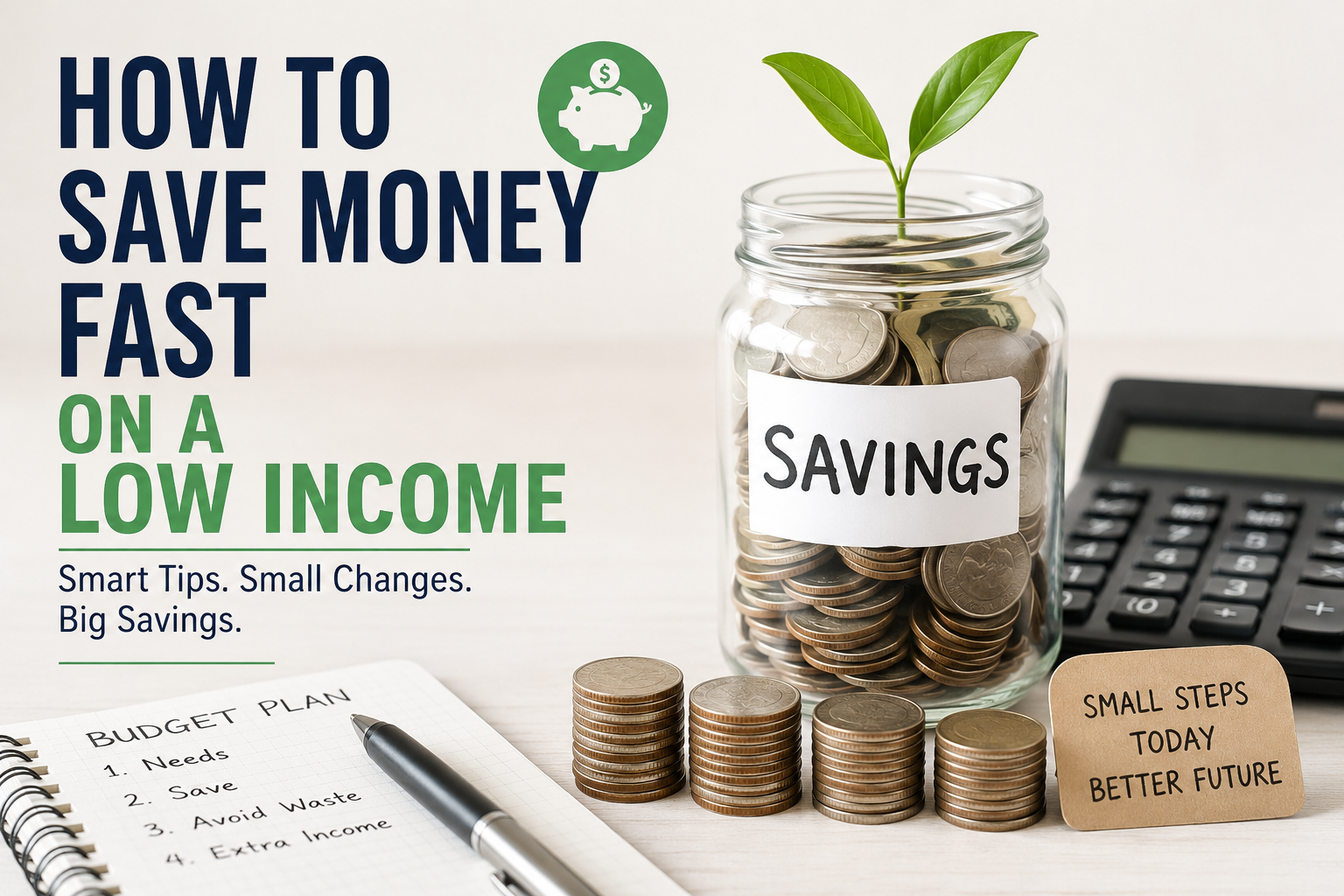
Saving money can feel almost impossible when your income is low. When most of your monthly income is already going toward rent, food, bills, transportation, and other basic needs, there may seem to be nothing left to save. I have felt this way myself, and I believe the biggest mistake is thinking that you need a large income before you can start saving.
The truth is that saving money on a low income is possible, but it requires a different approach. You do not need to save a huge amount at once. You need to control small expenses, make better choices, and build a habit that you can continue every month.
In my opinion, the best way to save money fast on a low income is to focus on the things you can actually control. Even small changes can make a noticeable difference when you repeat them consistently.
Start by Knowing Where Your Money Goes
Before trying to save money, I think it is important to understand where your money is going. Many people know how much they earn every month, but they do not know exactly how much they spend.
For one month, write down every expense. Include rent, groceries, transportation, phone bills, subscriptions, eating outside, shopping, and even small purchases.
Small expenses can be surprisingly expensive when they happen regularly. Buying a drink every day may not seem like a big deal, but those small purchases can become a significant amount by the end of the month.
Once you see your spending clearly, it becomes easier to identify areas where you can cut back.
Set a Small Savings Goal
When your income is low, setting an unrealistic savings goal can make you feel discouraged. Instead of saying that you will save half of your income, start with an amount that feels possible.
For example, you could start with $10, $20, or another amount that fits your situation. The important thing is to make saving a regular habit.
I personally believe that consistency matters more than the size of the first deposit. Saving a small amount every month teaches you to put money aside before spending everything you have.
As your financial situation improves, you can increase the amount.
Save Money Immediately After Getting Paid
One of the easiest ways to save money is to save before you start spending.
If you wait until the end of the month to save whatever is left, there may be nothing left. This happens because people usually adjust their spending according to the money available in their account.
Instead, when you receive your income, move a small amount into a separate savings account or savings space.
Even if the amount is small, this simple habit can make saving feel automatic.
Cut Unnecessary Subscriptions
Subscriptions can quietly take money from your account every month. You may have subscriptions for entertainment, music, apps, cloud storage, fitness services, or other things you rarely use.
I recommend checking your bank statement and making a list of every recurring payment.
Ask yourself whether each subscription is genuinely useful. If you have not used something in several weeks, consider canceling it.
You do not have to cancel everything. Keep the services that are important to you and remove the ones you barely use.
This can be one of the fastest ways to reduce monthly expenses because the savings happen repeatedly.
Cook More Meals at Home
Food is one area where many people can save money without making their life miserable.
Eating at restaurants or ordering food regularly can become expensive, especially when delivery fees and other charges are included.
Cooking at home does not have to mean preparing complicated meals. Simple foods such as rice, vegetables, eggs, beans, potatoes, pasta, chicken, and seasonal produce can be used to create affordable meals.
I find that planning meals before shopping also helps prevent unnecessary purchases.
If you know what you are going to eat during the week, you are less likely to order expensive food when you are hungry.
Make a Grocery List and Follow It
Going to a grocery store without a list can easily lead to overspending. You may buy things because they look interesting or because they are on sale, even though you do not really need them.
Before shopping, check what you already have at home. Then make a list of the items you actually need.
I also recommend avoiding grocery shopping when you are extremely hungry. Hunger can make unnecessary food purchases much more tempting.
A simple shopping list can save money every week.
Use What You Already Own
Another useful way to save money is to stop buying replacements for things you already have.
Before purchasing clothes, kitchen items, electronics, or household products, check what you already own.
Sometimes we buy something simply because we forgot that we already had a similar item.
I believe this is especially important when trying to save quickly. Instead of asking, “What can I buy?” start asking, “What can I use that I already have?”
This small change in thinking can reduce unnecessary spending.
Try a No Spend Challenge
A no spend challenge can be a useful way to save money quickly.
The idea is simple. For a certain period, you avoid spending money on unnecessary things. You still pay for essential expenses such as housing, food, transportation, and bills.
For example, you could try a no spend weekend or a full week.
During this time, avoid unnecessary shopping, restaurant meals, entertainment purchases, and impulse buying.
I like this approach because it helps you understand how often you spend money simply because you feel like buying something.
Reduce Transportation Costs
Transportation can take a large part of a low income budget. If possible, look for cheaper ways to travel.
Walking can be a good option for short distances. Public transportation may also cost less than using a car regularly.
If you drive, combining several errands into one trip can help reduce fuel costs.
Small changes in transportation habits can create meaningful savings over several months.
Find Small Ways to Increase Your Income
Saving is only one side of improving your finances. If your income is very limited, finding ways to earn extra money can make saving much easier.
Depending on your skills and available time, you might consider freelance work, online services, tutoring, selling unused items, part time work, or other legitimate income opportunities.
You do not necessarily need a second full time job.
Even earning a small additional amount each week can give you more room in your budget.
I think the best approach is to look for something that matches a skill you already have rather than spending a lot of money trying to start something new.
Sell Things You Do Not Need
Most people have things at home that they no longer use. Clothes, electronics, furniture, books, tools, and other items may be worth something to someone else.
Look around your home and identify items you have not used for a long time.
Selling these things can give you extra money without requiring you to take on another job.
Instead of letting unused items collect dust, you can turn them into savings.
Avoid Impulse Purchases
Impulse spending is one of the biggest problems when trying to save money.
Sometimes we see something we want and immediately convince ourselves that we need it. A useful trick is to wait before buying.
For smaller purchases, give yourself at least one day to think about them. For expensive purchases, give yourself more time.
After waiting, you may realize that you do not actually want the item.
This habit has helped me understand the difference between something I genuinely need and something I simply want at that moment.
Build an Emergency Fund
After you start saving, your first major goal should be building an emergency fund.
You do not need to save thousands of dollars immediately. Start with a small amount and gradually build it.
An emergency fund can help cover unexpected expenses such as a repair, medical bill, urgent travel, or temporary loss of income.
Without savings, an unexpected expense can force you to borrow money or use credit.
Even a small emergency fund provides some financial breathing room.
Stop Comparing Your Lifestyle With Others
One of the hardest parts of saving money is ignoring what other people are buying.
Social media can make it look like everyone is traveling, buying new phones, wearing expensive clothes, and eating at expensive restaurants.
But you never know the complete financial situation behind someone else’s lifestyle.
I believe it is better to focus on your own financial goals.
If you are saving money, paying your bills, reducing debt, and building financial security, you are making progress even if your lifestyle does not look impressive online.
Make Saving a Monthly Habit
Saving money fast is useful, but building a habit is even more important.
Once you find ways to reduce your expenses, keep those habits going.
You can review your budget at the beginning or end of every month. Look at what worked, where you overspent, and what you can improve next month.
Do not become discouraged if you have one bad month. Financial progress is not always perfect.
The goal is to keep moving forward.
Final Thoughts
Saving money on a low income is not easy, but I believe it is possible when you focus on realistic changes.
Start by tracking your spending, setting a small savings goal, cutting unnecessary subscriptions, cooking more meals at home, avoiding impulse purchases, and looking for ways to increase your income.
Most importantly, do not wait until you have a high income to start saving. Start with whatever amount you can afford today.
Even a small amount saved consistently can become meaningful over time. The real goal is not simply to save money quickly. It is to create better financial habits that can continue even when life becomes more expensive.
In my opinion, financial progress begins when you stop waiting for the perfect situation and start working with what you already have. You may not be able to change your income overnight, but you can change some of the decisions you make with the money you already earn.