When I started paying more attention to my personal finances, one thing I realized was that saving money is not only about building wealth. It is also about protecting yourself when life does not go according to plan. An unexpected medical bill, a sudden job loss, a car repair, or even a family emergency can create financial pressure within a very short time.
This is where an emergency fund becomes extremely important.
In my opinion, an emergency fund is one of the most useful financial habits anyone can develop. You do not need to be rich to start one. You simply need to make saving a regular part of your financial routine.
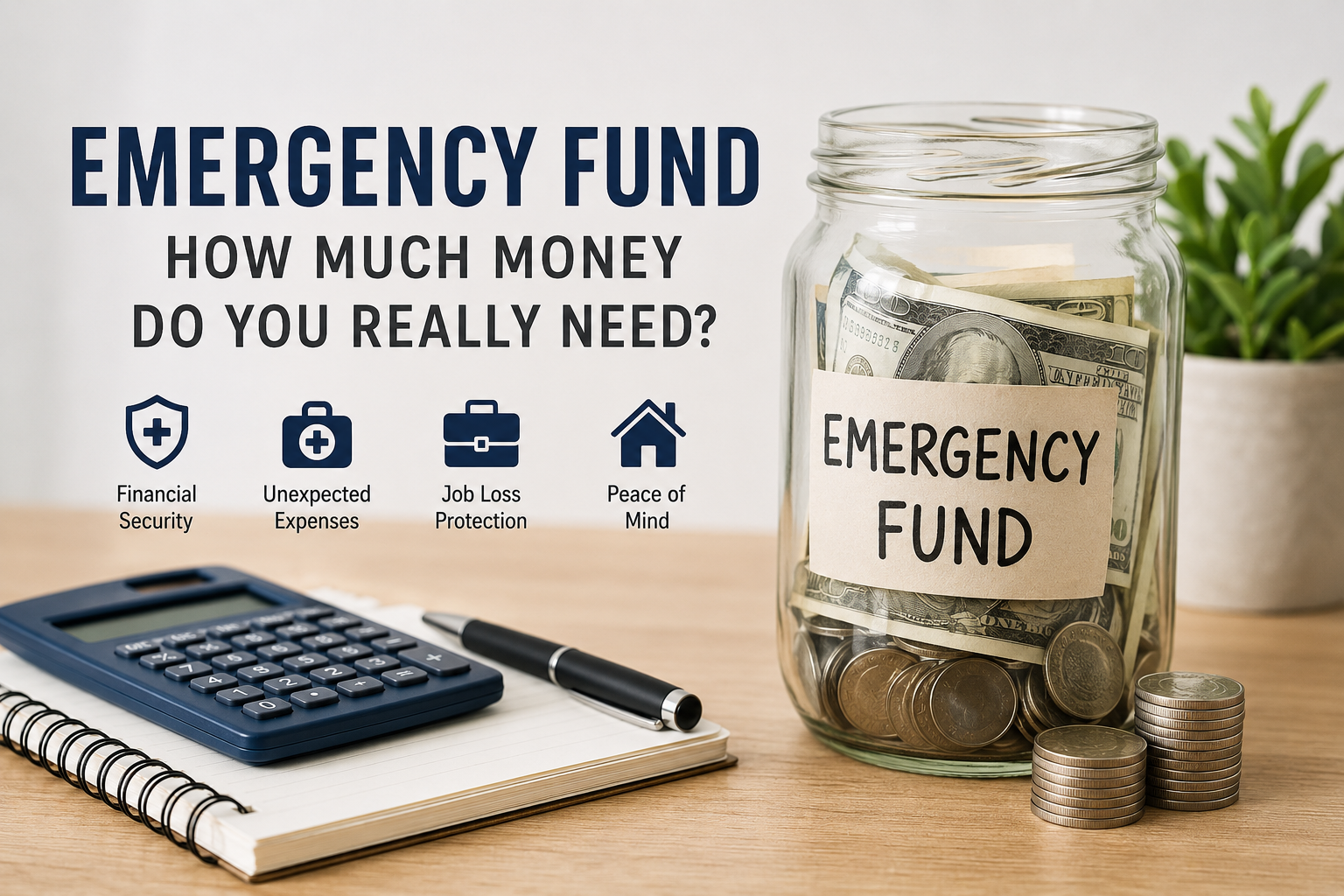
But the question I often think about is this: how much money do you really need in an emergency fund?
There is no single amount that works for everyone. Your ideal emergency fund depends on your monthly expenses, income, job security, family responsibilities, debts, and personal situation. However, there are some simple guidelines that can help you decide what amount makes sense for you.
What Is an Emergency Fund?
An emergency fund is money that you keep specifically for unexpected expenses or financial situations. It is not money for vacations, shopping, entertainment, or buying something you simply want.
The purpose of this money is to give you financial breathing room when something unexpected happens.
For example, imagine that your monthly essential expenses are $2,000. If you suddenly lose your job, having $6,000 saved could give you around three months to manage your basic expenses while looking for another source of income.
Without savings, you might have to borrow money, use a credit card, sell important belongings, or depend on someone else.
That is why I see an emergency fund as a form of financial protection rather than just another savings account.
How Much Should You Save?
A common recommendation is to save between three and six months of essential living expenses.
For someone whose essential expenses are $2,000 per month, that would mean an emergency fund between $6,000 and $12,000.
However, I do not believe everyone needs to immediately save six months of expenses. For many people, that target can feel overwhelming.
I think it is better to start with a smaller goal and gradually increase it.
Your first target could be $500 or $1,000. Once you reach that amount, you can work toward one month of essential expenses. After that, you can aim for three months and eventually six months if your financial situation requires it.
The most important thing is to actually start.
Start With a Small Emergency Fund
One mistake I see people make is thinking they need thousands of dollars before an emergency fund is useful.
That is not true.
Even a small amount can make a difference.
Suppose you have $300 saved and your phone suddenly breaks. Instead of borrowing money or using a credit card, you may be able to use part of your savings to handle the expense.
That is a small example, but the same principle applies to larger emergencies.
I personally believe that the first goal should be creating a small financial cushion. Once that cushion exists, you can focus on making it stronger.
Three Months of Expenses
For many people, three months of essential expenses is a reasonable emergency fund goal.
If you spend $1,500 each month on housing, food, utilities, transportation, insurance, and other necessary expenses, three months would equal $4,500.
This amount can provide useful protection if your income suddenly stops.
Three months may be enough for someone with a stable job, low debt, and another person in the household earning income. It may also be appropriate for someone who has relatively low monthly expenses.
However, your situation might require a larger emergency fund.
Six Months of Expenses
Six months of essential expenses is often considered a stronger financial safety net.
If your essential monthly expenses are $2,000, six months would be $12,000.
I think this target makes more sense for people who have less predictable income, work in industries where finding another job can take time, support a family, or have significant financial responsibilities.
Self employed people and freelancers may also want a larger emergency fund because their income can change from month to month.
Having six months of expenses saved does not mean you will never experience financial stress. It simply gives you more time to make decisions without immediately worrying about how you will pay your basic bills.
What Should Your Emergency Fund Cover?
One important point is that your emergency fund should be based on essential expenses rather than your total lifestyle spending.
For example, you may spend money every month on restaurants, streaming services, entertainment, shopping, and vacations. These expenses are part of your normal lifestyle, but they may not be necessary during an emergency.
When calculating your emergency fund, I would focus on expenses such as rent or mortgage payments, groceries, utilities, transportation, insurance, basic healthcare costs, minimum debt payments, and other essential bills.
This approach can make your emergency fund target much more realistic.
Where Should You Keep Your Emergency Fund?
In my opinion, accessibility is one of the most important features of an emergency fund.
The money should be somewhere safe and easy to access when you actually need it.
A savings account can be a practical option because you can access the money without having to sell investments.
I would personally avoid putting emergency savings into risky investments because the value of investments can fall exactly when you need the money.
The purpose of an emergency fund is stability, not maximum returns.
You can focus on investing and growing your money after you have created a reasonable financial safety net.
Do Not Mix Your Emergency Fund With Everyday Money
Another habit that can make saving difficult is keeping your emergency money in the same account you use for everyday spending.
When everything is in one place, it can become very easy to spend your savings without realizing it.
I think having a separate savings account can create a psychological barrier between your emergency money and your normal spending money.
You know the money is there, but you also know that it is reserved for serious situations.
This simple separation can make a big difference.
How Can You Build an Emergency Fund?
Building an emergency fund does not have to happen overnight.
For me, the easiest way to approach saving is to make it automatic.
For example, if you receive your salary every month, you could transfer a fixed amount into your emergency savings shortly after getting paid.
Even $50 or $100 per month can eventually become a meaningful amount.
If you save $100 every month, you will have $1,200 after one year, not including any interest your savings may earn.
You can also put unexpected money toward your emergency fund. Tax refunds, bonuses, gifts, freelance income, or money from selling things you no longer need can help you reach your goal faster.
What If You Have Debt?
This is where personal circumstances become important.
If you have high interest debt, you may not want to put every extra dollar into your emergency fund while ignoring the debt.
At the same time, having no emergency savings can create another problem. If an unexpected expense appears, you may simply add more debt.
That is why I think having a small emergency fund while aggressively paying expensive debt can be a balanced approach.
For example, you might first build a small cushion of $500 or $1,000. Then you can focus more strongly on paying down high interest debt. Once the debt is under control, you can increase your emergency fund toward three to six months of expenses.
The right balance depends on your income, debt interest rates, and personal responsibilities.
When Should You Use Your Emergency Fund?
An emergency fund should be used for genuine emergencies.
A sudden job loss is an emergency. A major unexpected medical expense may be an emergency. An urgent home repair can be an emergency. A necessary car repair may also qualify.
Buying a new phone because you want the latest model is not an emergency.
Taking a vacation because you are tired is not an emergency either.
I think having clear rules before an emergency happens can help you make better decisions later.
If you are unsure whether something is an emergency, ask yourself whether the expense is necessary, unexpected, and difficult to handle with your normal monthly income.
Rebuild Your Fund After Using It
Using your emergency fund does not mean you failed at saving.
Actually, using it for a genuine emergency means the fund did exactly what it was supposed to do.
The important part is rebuilding it afterward.
For example, if you had $6,000 saved and needed $2,000 for an unexpected expense, your new balance would be $4,000.
Instead of feeling discouraged, you can simply return to your regular saving routine and gradually rebuild the missing amount.
Your emergency fund is a financial tool. It is not a number that you have to protect at all costs.
My View on the Right Emergency Fund Amount
If someone asked me how much they should save, I would not give them one universal number.
I would tell them to start with a small emergency fund and then calculate three to six months of essential expenses.
If your income is very stable and your expenses are low, three months may provide enough protection.
If your income is unpredictable, you have dependents, or finding another job could take a long time, six months or more may be more appropriate.
The goal is not to save an impressive amount just so you can say you have it. The goal is to create enough financial security that an unexpected event does not completely disrupt your life.
Final Thoughts
An emergency fund may not be the most exciting part of personal finance, but I believe it is one of the most important.
Investing can help you build wealth. Saving for retirement can help you prepare for the future. But an emergency fund helps protect you today.
You do not have to build a huge emergency fund immediately. Start with whatever amount you can comfortably save. Make saving automatic, keep the money separate from your everyday spending, and gradually increase your target as your financial situation improves.
For me, the biggest benefit of an emergency fund is not simply having money in a savings account. It is having peace of mind.
When something unexpected happens, you know you have a financial cushion to fall back on. That confidence can help you make better decisions instead of making financial choices out of panic.
If you are currently building your savings, do not worry about reaching the perfect number right away. Start small, stay consistent, and keep increasing your emergency fund over time.
Financial security is built through small decisions repeated consistently, and an emergency fund is one of the best places to begin.