I used to think tracking monthly expenses was something only people with complicated financial lives needed to do. I would pay my bills, buy groceries, order food, shop when I needed something, and assume I was spending within my limits. The problem was that at the end of the month, I often wondered where my money had gone.
That experience taught me something simple. You do not need to earn a huge income to manage money better. You first need to understand where your money is going.
Tracking monthly expenses is one of the easiest habits that can improve your financial life. It does not have to involve complicated spreadsheets or hours of calculations. With a simple system and a few minutes each day, you can keep a clear record of your spending and make better decisions.
In this article, I will explain how I would approach tracking monthly expenses in a simple and realistic way.
Why Tracking Monthly Expenses Matters
Before talking about methods, I think it is important to understand why expense tracking is useful.
When you do not track your spending, small purchases can easily become invisible. A coffee here, a delivery order there, a subscription you forgot about, and a few unnecessary shopping purchases may not seem important individually. Together, however, they can take a meaningful amount of money from your monthly income.
Tracking expenses gives you visibility.
Once you know how much you are spending on food, transportation, entertainment, bills, shopping, and other areas, you can decide whether those expenses actually match your priorities.
For me, the biggest benefit of tracking expenses is awareness. I do not believe that every expense needs to be eliminated. Instead, I believe I should know what I am paying for and decide whether it is worth it.
Start With Your Monthly Income
The first step I recommend is knowing exactly how much money you have available each month.
Write down your regular monthly income. If you have a salary, this may be straightforward. If you are a freelancer, business owner, or someone with irregular income, you can use a conservative estimate based on your recent earnings.
The goal is not to predict every penny perfectly. The goal is to create a realistic starting point.
For example, if your monthly income is $3,000, you can use that number as your starting point. Then you can compare your total monthly expenses against it.
Knowing your income makes your expense tracking much more meaningful because you are not just recording numbers. You are seeing how those numbers affect your overall financial situation.
Choose One Simple Tracking Method
One mistake people make is choosing a system that is too complicated.
If you create a huge spreadsheet with dozens of categories and complicated formulas, you might enjoy it for a few days and then stop using it.
I prefer simple systems.
You can track expenses using a notes app on your phone, a spreadsheet, a budgeting app, or even a notebook. The best method is the one you can actually use consistently.
Personally, I think a basic spreadsheet is enough for many people. You can create columns for the date, expense, category, and amount.
For example, you might record:
Date: August 5
Expense: Groceries
Category: Food
Amount: $85
That is all you need to get started.
Track Every Expense
The most important rule is to record everything.
Do not only track large purchases. Small expenses matter too.
If you spend $3 on a coffee, record it. If you spend $10 on lunch, record it. If you pay $50 for a subscription, record it.
The purpose of tracking is to create an accurate picture of your spending.
When I look at expenses individually, many of them seem insignificant. But when I look at them together at the end of the month, the pattern becomes much clearer.
This is why I believe expense tracking should be honest. Do not change numbers because you think you spent too much. The goal is not to judge yourself. The goal is to understand your financial habits.
Divide Expenses Into Categories
After recording your expenses, divide them into simple categories.
You do not need twenty different categories. Five to ten categories are usually enough.
Some useful categories include housing, groceries, transportation, utilities, entertainment, shopping, subscriptions, eating out, debt payments, and savings.
The exact categories depend on your lifestyle.
If you frequently spend money on hobbies, you might create a hobby category. If you work from home, you may want to track work related expenses separately.
The purpose of categories is to make your spending easier to understand.
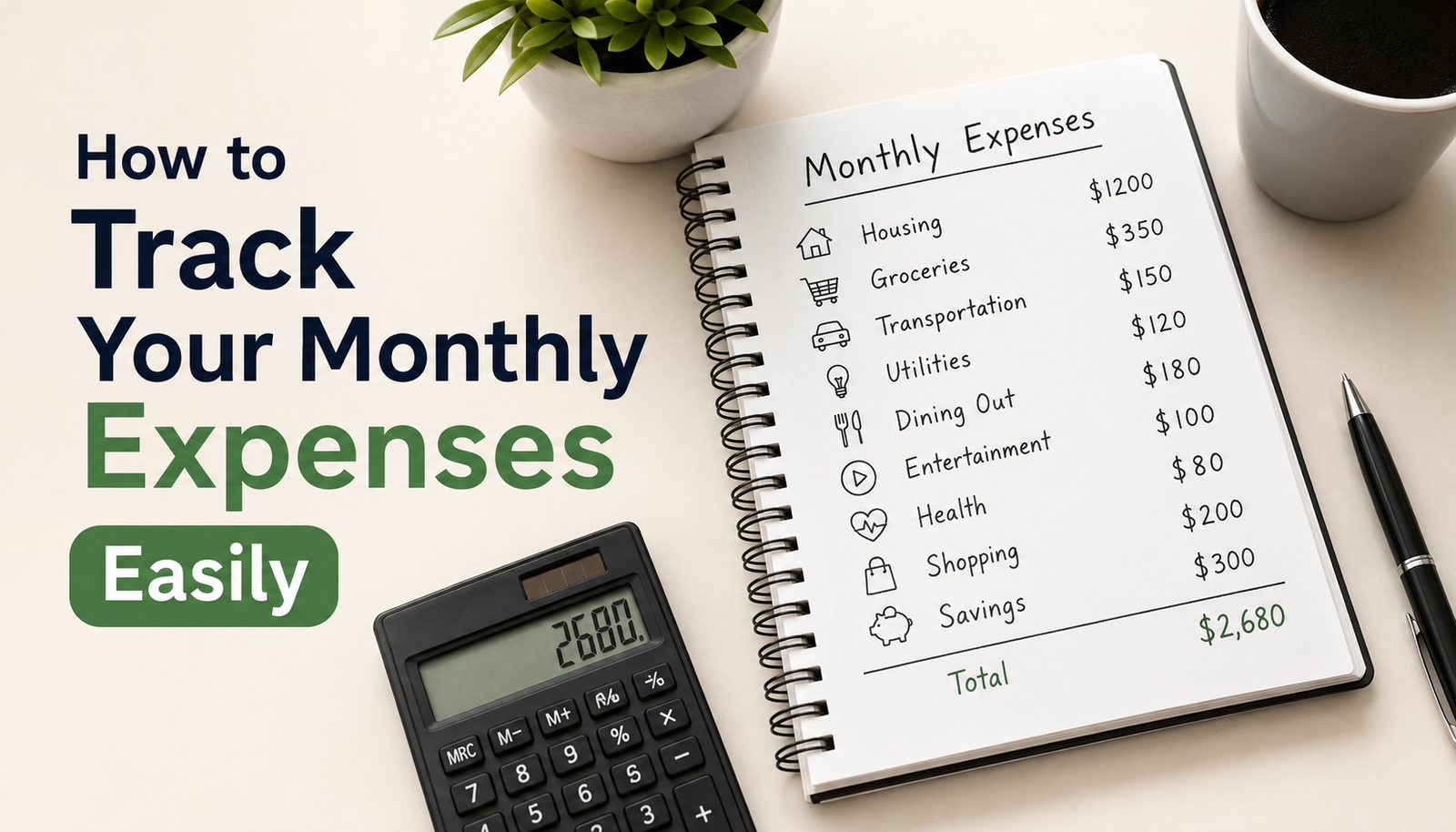
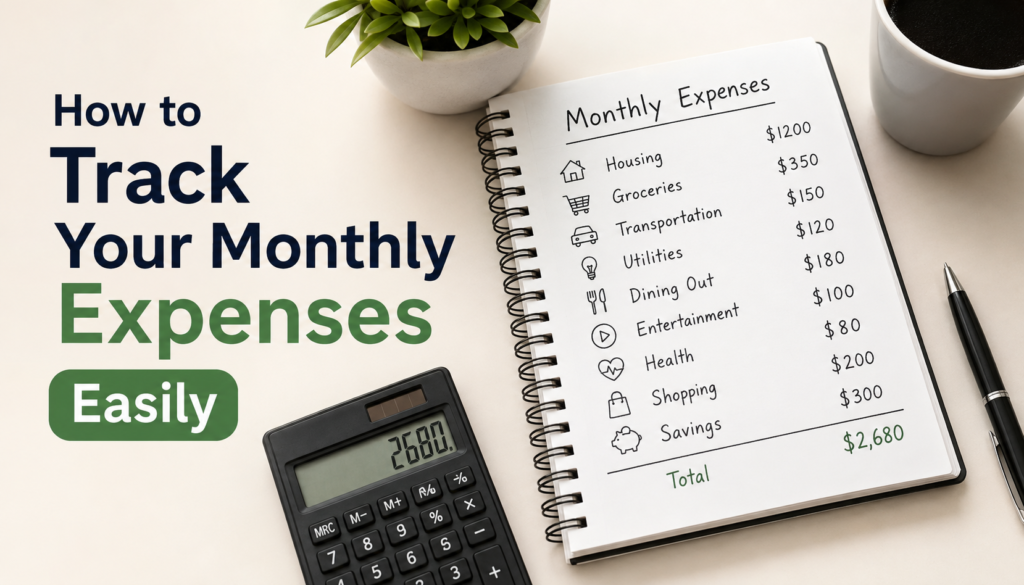
Instead of seeing a long list of random transactions, you can see that you spent $400 on groceries, $150 on transportation, and $200 on eating out.
That information is much more useful.
Check Your Expenses Weekly
I do not think you should wait until the last day of the month to look at your expenses.
A weekly review is much easier.
Once or twice a week, spend about ten minutes reviewing what you have spent. Check your bank account, credit card transactions, cash purchases, and digital payment history.
Make sure everything has been recorded.
This small habit can prevent mistakes and help you notice problems early.
For example, if you realize halfway through the month that you are already spending more than expected on restaurants, you still have time to adjust your behavior.
That is much better than discovering the problem after the month is already over.
Separate Needs From Wants
One of the most useful things I learned from tracking expenses is that not every expense has the same importance.
Some expenses are necessary. Rent, electricity, groceries, transportation, insurance, and basic household needs may fall into this category.
Other expenses are wants. These might include entertainment, expensive meals, impulse purchases, or buying things simply because they look interesting.
This does not mean wants are bad.
I believe enjoying your money is part of having a healthy relationship with finances. The problem starts when wants consistently interfere with important financial goals.
Tracking expenses helps you see the difference.
You may discover that you are spending more on things you barely care about while struggling to save for something important.
That realization can be powerful.
Pay Attention to Small Recurring Expenses
Recurring expenses deserve special attention because they are easy to forget.
Streaming services, software subscriptions, memberships, cloud storage, apps, and other monthly payments can quietly add up.
I recommend checking your bank and card statements for recurring charges at least once a month.
Ask yourself whether you still use each service.
If you have three streaming subscriptions but only regularly watch one, you may have an easy opportunity to reduce your monthly expenses.
The same applies to memberships and other automatic payments.
A small monthly charge may not feel important, but several unnecessary subscriptions can become expensive over an entire year.
Use Your Bank Statements
Your bank statement can become one of your best expense tracking tools.
Even if you record expenses manually, review your statements regularly.
Sometimes you will forget a purchase or overlook an automatic payment. Your statement gives you a second way to verify your records.
I also recommend checking your statements for transactions you do not recognize.
Expense tracking is not only about budgeting. It can also help you notice unusual activity and keep better control over your accounts.
Track Cash Spending Too
Cash expenses are easy to forget.
If you withdraw $100 from an ATM and spend it over several days, you may not remember exactly where the money went.
That is why I recommend recording cash purchases immediately.
You can simply write the amount and category in your phone.
For example, if you spend $20 on transportation and $15 on lunch, record those expenses when they happen.
It takes less than a minute and makes your monthly records much more accurate.
Review Your Total Spending at the End of the Month
At the end of each month, calculate your total expenses.
Then compare your spending with your income.
This is where the real value of expense tracking becomes visible.
Look at your categories and ask yourself a few simple questions.
Where did most of my money go?
Which expenses were necessary?
Which purchases were unnecessary?
Did I spend more than I expected?
Did I save enough?
What would I like to change next month?
I would not recommend trying to change everything at once. Pick one or two areas that have the biggest impact.
For example, if you discover that eating out is taking a large portion of your budget, you could reduce restaurant meals slightly next month.
Small improvements are easier to maintain than extreme changes.
Make Expense Tracking a Habit
The biggest secret to tracking expenses easily is consistency.
You do not need to spend an hour every day managing your money.
A few minutes can be enough.
Record expenses when they happen, review them weekly, and analyze your spending at the end of the month.
After doing this for a few months, you will start noticing patterns.
You may learn which categories are consistently expensive, when you tend to overspend, and which expenses can easily be reduced.
Over time, this information can make budgeting much easier.
Do Not Try to Be Perfect
I think this is one of the most important points.
You will probably forget to record an expense sometimes. You may spend more than planned. You may have an unexpected bill.
That does not mean your system has failed.
Expense tracking is not about creating a perfect financial life. It is about becoming more aware of your decisions.
If you make a mistake, simply record it and continue.
The goal is progress, not perfection.
Final Thoughts
Tracking monthly expenses does not have to be difficult. In my opinion, the best system is one that is simple enough to continue using every month.
Start by knowing your income. Choose one tracking method. Record every expense, including small purchases and cash spending. Organize expenses into simple categories and review your spending regularly.
At the end of the month, look for patterns rather than judging yourself.
You may be surprised by what you discover. Some expenses that seemed unimportant may be costing you a lot over time. At the same time, you may realize that some things you enjoy are completely reasonable and worth keeping.
For me, the real purpose of tracking expenses is not simply spending less. It is knowing where my money goes so I can make better choices with it.
Once you understand your spending habits, creating a realistic monthly budget becomes much easier. More importantly, you start feeling more in control of your money instead of wondering where it disappeared at the end of every month.